Event Design for High-Value Networking
23.01.2024



The conference room fills with attendees who settle into rigid rows of chairs facing a distant podium, pulling out phones to scroll through emails while waiting for presentations to begin. Three hours later, they file out having absorbed information passively but having connected with exactly no one beyond the colleagues they arrived with. The organizers invested substantial resources into speakers, catering, and promotional materials, yet the event produced nothing beyond what a recorded webinar could have delivered at a fraction of the cost. This scenario repeats countless times across corporate gatherings, industry conferences, and professional meetings where event planning focuses on logistics and content delivery while neglecting the design elements that actually determine whether human beings will connect meaningfully with each other.
The distinction between events that spark genuine collaboration and those that merely occupy calendar space lies not in budget magnitude or speaker prestige but in intentional design choices that shape how people move, interact, and engage throughout the experience. Event design encompasses far more than aesthetic decisions about colors and centerpieces. It involves understanding human psychology, engineering spatial flow, structuring time strategically, and creating conditions where connection happens naturally rather than awkwardly. When these elements align thoughtfully, events transform from information delivery mechanisms into catalysts for relationships, ideas, and collaborations that continue generating value long after attendees return to their regular routines.
The contemporary event landscape demands this transformation because passive attendance no longer justifies the investment that in-person gatherings require. People can absorb content through countless digital channels without traveling, taking time away from work, or navigating the social discomfort that poorly designed events create. What they cannot replicate remotely is the serendipitous encounter in a well-designed networking zone, the energizing exchange during a thoughtfully structured break, or the collaborative breakthrough that emerges when spatial design brings the right people together at the right moment. These outcomes require intentional event design that treats connection as a primary objective rather than a hoped-for byproduct of gathering people in the same physical space.
Understanding why certain environments facilitate connection while others inhibit it requires examining the psychological factors that influence human behavior in social settings. People arrive at professional events carrying cognitive load from their regular responsibilities, social anxiety about interacting with strangers, and uncertainty about how to navigate unfamiliar spaces and expectations. Effective event design acknowledges these psychological realities and creates conditions that reduce friction rather than adding to it.
Cognitive load, meaning the mental effort required to process information and make decisions, affects how much capacity attendees have available for meaningful interaction. Events that present confusing layouts, unclear schedules, or overwhelming stimulation consume cognitive resources that could otherwise support engagement with content and connection with other attendees. Simplifying navigation through intuitive spatial design, clear signage, and logical flow reduces this burden and frees mental energy for the interactions that make events valuable.
Social comfort depends heavily on environmental factors that event designers can influence deliberately. The distance between seats affects whether conversation feels natural or forced. Ambient noise levels determine whether people can hear each other without shouting. Lighting influences energy levels and the intimacy of interactions. Temperature affects whether people feel alert and comfortable or distracted by physical discomfort. Each of these factors contributes to the overall social atmosphere that either encourages or discourages the connections events aim to facilitate.
Environmental cues communicate expectations about appropriate behavior in ways that shape attendee actions without explicit instruction. Lecture-style seating signals that passive listening is expected. Clustered furniture groupings suggest conversation is welcome. Standing tables indicate brief, mobile interactions. Open spaces invite movement while enclosed areas create intimacy. Thoughtful deployment of these cues guides attendee behavior toward connection without requiring awkward instructions about how to network.
Harvard Business Review has published extensive research on workplace design and collaboration, demonstrating how physical environments shape interaction patterns in ways that apply directly to event contexts. The principles that make office spaces conducive to collaboration translate into event settings where the goal is facilitating connection among people who may not work together regularly.
Static events where attendees remain seated in the same positions for extended periods produce diminished engagement, reduced energy, and limited interaction. Movement, by contrast, increases blood flow that supports alertness, creates natural opportunities for new conversations, and prevents the lethargy that descends when bodies remain immobile while minds attempt to stay active. Designing events that encourage purposeful movement transforms the physical experience in ways that support both learning and connection.
Circulation paths through event spaces influence who encounters whom and how naturally conversations begin. Events designed with single entry and exit points funnel all traffic through the same locations, creating bottlenecks but also concentration points where encounters happen. Distributed circulation creates more varied traffic patterns with different encounter possibilities. Neither approach is inherently superior, but intentional choices about circulation shape the interaction dynamics that events produce.
Standing zones positioned strategically throughout event spaces create natural gathering points where brief conversations can happen without the commitment that sitting down together implies. These zones work particularly well near refreshment stations, registration areas, and transitions between sessions where people naturally pause. Providing comfortable standing options through high-top tables, counter-height surfaces, and rail-height ledges makes these zones inviting rather than exhausting.
Intentional transitions between sessions can be designed to maximize interaction rather than simply moving bodies from one room to another. Longer breaks between sessions in different locations encourage movement and conversation. Routing transitions through networking zones rather than directly between session rooms creates encounter opportunities. Providing transition activities like exhibit browsing or interactive displays gives attendees reasons to engage rather than simply waiting for the next session to begin.
Conferences and large gatherings particularly benefit from movement-oriented design because the scale creates potential for diverse connections that smaller events cannot match. When hundreds or thousands of attendees remain seated in auditorium rows, this potential remains unrealized. When the same attendees move through thoughtfully designed spaces that facilitate encounters, the diversity of perspectives and backgrounds that large events attract actually produces the varied connections that make attendance worthwhile.
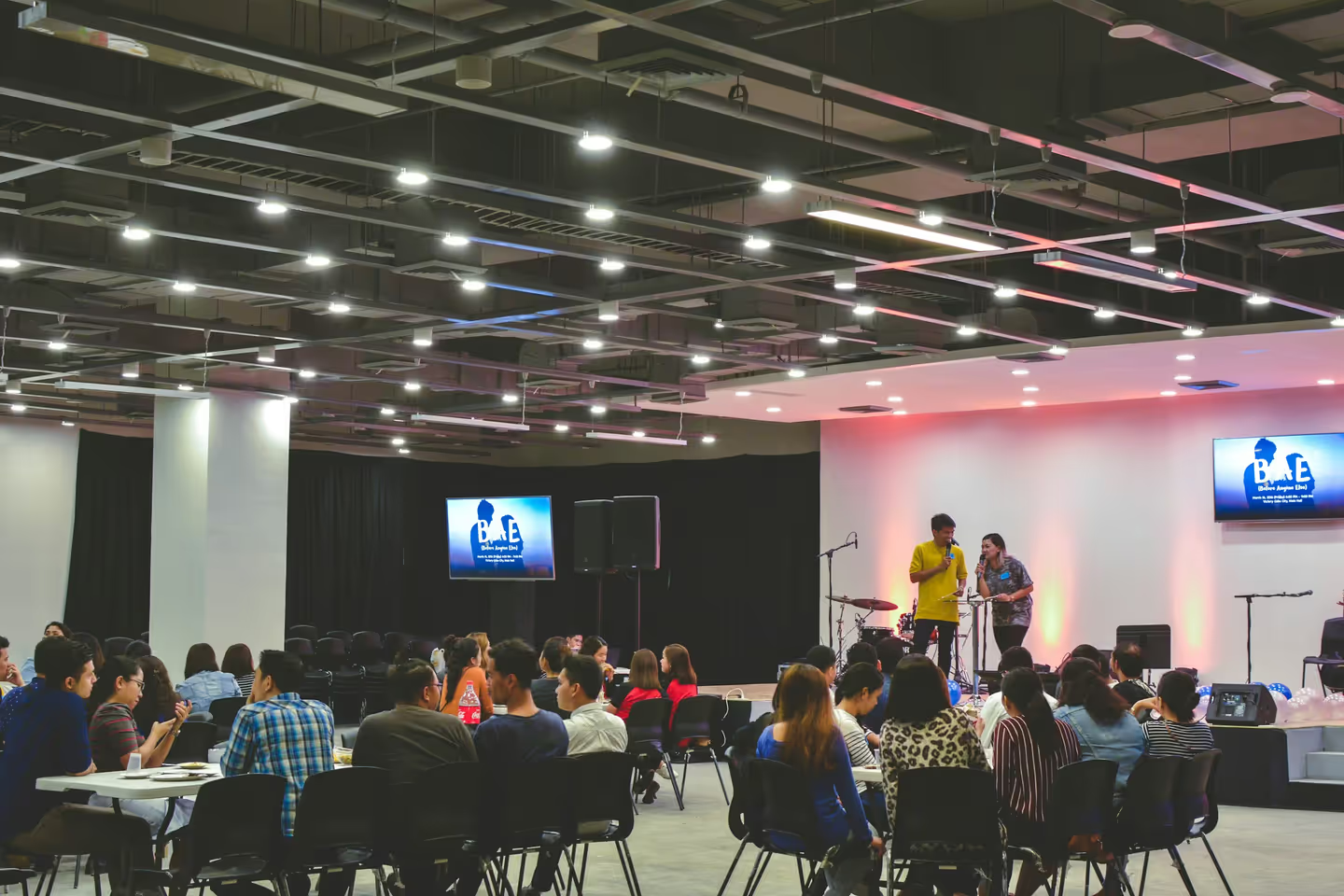
Traditional event setups assume that optimal configurations can be determined in advance and maintained throughout events, an assumption that ignores how engagement dynamics shift across different sessions, times of day, and activity types. Flexible seating arrangements and modular spaces that can adapt to changing needs support the varied interaction styles that connection-oriented events require.
Modular furniture designed for event settings enables rapid reconfiguration without specialized labor or extended changeover times. Lightweight tables and chairs that single staff members can move allow spaces to transform between sessions. Modular soft seating creates conversational groupings that can expand or contract based on group sizes that emerge organically. Mobile storage for excess furniture prevents unused pieces from cluttering spaces during configurations that require less seating.
Reconfigurable rooms equipped with movable walls, adjustable lighting zones, and distributed power and technology access points support multiple event formats within single spaces. A room configured for plenary sessions in the morning can become breakout spaces in the afternoon and networking zones in the evening. This flexibility allows events to flow through different modes without constraining attendees to fixed spaces or requiring venue changes that consume time and attention.
Different interaction styles require different spatial supports that flexible arrangements can provide. Some attendees prefer intimate conversations in quiet corners. Others thrive in energetic group discussions around shared tables. Some connect best through collaborative activities requiring workspace surfaces. Others prefer standing interactions that remain brief and mobile. Spaces offering varied options accommodate this diversity rather than forcing all attendees into single interaction modes that suit some while alienating others.
The investment in flexible infrastructure pays returns across multiple events as spaces adapt to varied purposes without requiring different venues for different format needs. Organizations hosting regular events find that versatile spaces support creativity in event design that fixed configurations constrain. The ability to experiment with different arrangements based on event goals and attendee feedback becomes possible when physical infrastructure supports rather than limits design choices.
The configuration of conference room seating communicates expectations about interaction dynamics before anyone speaks a word, making layout choices among the most consequential decisions in event design. Different arrangements serve different purposes, and matching layout to event goals ensures that physical setup supports rather than undermines intended outcomes.
Boardroom configurations with attendees seated around rectangular tables work well for decision-making meetings where all participants need to see and address each other directly. The format establishes relative equality among seated participants while creating clear distinction between those at the table and any observers. This arrangement supports focused discussion among defined groups but limits scalability and can create hierarchy based on seat positioning.
Classroom setups with rows facing a front presentation area efficiently accommodate large groups for information delivery but minimize interaction among attendees. The format signals that attention should focus forward rather than laterally, making it appropriate for content-heavy sessions but counterproductive for events prioritizing connection. Modified classroom arrangements with curved rows or angled sections can soften the rigid forward focus while maintaining presentation visibility.
U-shape configurations create openness at the front for presenters while allowing attendees to see each other around the perimeter. This format supports discussion better than classroom arrangements while maintaining presentation capability. The open center can accommodate demonstrations, activities, or simply create less crowded visual space. U-shapes work well for workshops and training sessions where both instruction and interaction are needed.
Cabaret layouts cluster attendees at round tables facing a front presentation area, balancing presentation visibility with table-group interaction. This format supports mixed-mode sessions that alternate between presentation and small-group discussion or activities. Table assignments can be random to encourage diverse connections or intentional to group attendees by interest, industry, or other characteristics that make conversation productive.
MeetingsNet provides extensive resources on conference room configurations and their effects on meeting dynamics, helping event planners match layouts to specific session objectives and overall event goals.
Open-circle formats remove tables entirely, placing chairs in circles or concentric rings that face each other rather than a front presentation area. This arrangement signals that all participants have equal voice and that interaction among attendees matters as much as any formal content. Open circles work well for discussions, peer learning sessions, and community-building activities where hierarchy and formal presentation would undermine objectives.
Unstructured networking time often produces the awkward milling about that gives networking its negative reputation, with attendees uncertain where to go, whom to approach, or how to initiate conversation. Clearly defined networking zones with intentional design elements reduce this awkwardness by creating environmental supports that invite and facilitate interaction.
Spatial definition through flooring changes, ceiling treatments, lighting variations, or furniture arrangements establishes networking zones as distinct from circulation and session spaces. This definition communicates that the zone has a specific purpose, networking and conversation, rather than simply being leftover space between more important areas. The psychological effect of entering a defined zone signals appropriate behavior shift in ways that open, undifferentiated space cannot.
Signage and wayfinding elements help attendees locate networking zones and understand what each offers. Signs might identify zones by topic, industry, or interest area, giving attendees reasons to visit specific zones where they might find relevant connections. Digital signage can update dynamically to reflect scheduled networking activities or display information about attendees currently in the zone who have opted into visibility.
Lighting in networking zones should balance visibility for recognition and reading name badges with warmth that creates comfortable atmosphere. Overly bright lighting feels clinical and uncomfortable for conversation. Overly dim lighting makes identification difficult and can suggest the zone is closed or private. Adjustable lighting allows modulation based on time of day, concurrent activities, and desired atmosphere.
Acoustics significantly affect networking zone functionality because conversation requires hearing without shouting. Zones near loud music, kitchen activity, or mechanical equipment frustrate attempts at meaningful conversation. Sound-absorbing materials, strategic placement away from noise sources, and appropriate ambient sound levels create conditions where connection can actually happen rather than being blocked by environmental interference.
Furniture arrangements within networking zones should facilitate varied interaction group sizes and styles. Some clusters supporting two-person conversations accommodate attendees seeking one-on-one connection. Larger groupings support small group discussions. Standing tables allow brief, mobile interactions for those working the room. Seating options ranging from stools to comfortable chairs accommodate different comfort preferences and interaction durations.
Breaks in event schedules represent prime opportunities for connection that poor design frequently wastes. When breaks simply provide downtime with nothing structuring how attendees spend them, many retreat to phones, leave the venue, or cluster with existing colleagues. Thoughtfully designed breaks become engagement opportunities that extend the event's connection-generating capacity into every available moment.
Break timing affects how attendees use the time, with shorter breaks encouraging quick refreshment and restroom visits while longer breaks support meaningful conversation. Fifteen-minute breaks rarely allow time for substantial interaction after basic needs are met. Thirty-minute breaks provide enough time for conversations to develop. Hour-long breaks accommodate multiple interactions or deeper single conversations. Matching break duration to connection objectives ensures that time allocation supports rather than undermines design intentions.
The physical transition from session spaces to break areas offers design opportunities for facilitating connection. Routing traffic through networking zones rather than directly to restrooms or exits creates encounter opportunities. Positioning compelling elements like interactive displays or refreshments along transition paths gives attendees reasons to pause and engage rather than rushing through.
Human energy and attention fluctuate predictably across time periods, with implications for scheduling that connection-oriented event design must address. Ignoring these natural rhythms produces sessions that fight biology rather than working with it, resulting in diminished engagement and reduced connection regardless of content quality or spatial design.
Morning hours typically offer highest mental alertness, making them appropriate for content-heavy sessions requiring sustained attention. Post-lunch periods often bring energy dips that passive content exacerbates. Late afternoon can produce either fatigue or second-wind energy depending on how earlier portions of the day were managed. Evening sessions benefit from social energy but may find attendees mentally depleted from full days.
Session length affects attention sustainability, with research suggesting that focused attention degrades significantly after approximately twenty minutes without breaks or interaction. Traditional hour-long conference sessions push well past this threshold, requiring speakers to work against declining attention rather than with natural engagement patterns. Shorter sessions with built-in interaction or movement elements maintain engagement more effectively than longer uninterrupted blocks.
Pacing and transitions between sessions influence energy maintenance throughout events. Back-to-back sessions without adequate transition time prevent mental reset and physical movement that sustain engagement. Sessions requiring high energy immediately following low-energy blocks create jarring transitions that attendees struggle to navigate. Thoughtful sequencing that varies session types and allows appropriate transitions maintains momentum across full event days.
The overall event arc should build toward peak engagement rather than front-loading the best content and allowing events to trail off. Starting with connection-building activities establishes social foundation for subsequent content engagement. Building toward afternoon or evening highlights maintains motivation through lower-energy periods. Ending with high-impact sessions or experiences ensures attendees leave with positive final impressions.
Managing the complexity of connection-oriented event design requires tools that track details, coordinate logistics, and ensure that thoughtful design intentions translate into actual attendee experience. Event planning software provides capabilities that enable consistency across planning processes and event execution that manual approaches struggle to achieve.
Floor plan mapping features within modern event planning software allow designers to visualize spatial arrangements, test traffic flow, and ensure that furniture placement supports intended interaction patterns. Digital floor plans can be shared with venue staff, vendors, and team members to ensure that setup matches design specifications. Changes can be made and communicated instantly rather than requiring physical meetings and paper plan revisions.
Agenda management tools coordinate scheduling complexity, ensuring that session timing supports energy flow objectives and that transitions allow adequate time for movement and interaction. Linked agendas can update across all distributed materials when changes occur, preventing the confusion that different attendees having different schedule information creates. Integration with attendee-facing apps ensures that participants always have current schedule access.
Cvent offers comprehensive event technology platforms that support the planning, execution, and measurement of connection-oriented events through integrated tools addressing floor planning, scheduling, registration, and engagement tracking.
Attendee flow tracking through badge scanning, app check-ins, or sensor technologies provides data about how attendees actually move through events and which spaces generate the most engagement. This information allows real-time adjustment during events and informs design improvements for future events. Understanding where attendees gather naturally and where they avoid helps refine spatial design to support rather than fight organic behavior patterns.
Registration and attendee management features support connection objectives by capturing information that enables thoughtful grouping, seating assignments, and networking facilitation. Knowing attendee interests, industries, and connection goals allows event designers to create conditions where relevant matches become more likely. Pre-event communication facilitated through planning software can prime attendees for networking and set expectations about interaction opportunities.
The tension between standardization and customization affects how organizations approach event design, with templates offering efficiency and consistency while potentially constraining the creativity that makes events memorable. Finding the balance that captures template benefits without sacrificing the unique design that connection requires involves understanding what should be standardized and what should remain flexible.
An effective event planning template captures lessons learned from previous events, encoding successful practices into repeatable frameworks that prevent reinventing processes unnecessarily. Templates for timeline management ensure that critical deadlines are not missed. Templates for vendor coordination standardize communication and expectations. Templates for on-site logistics ensure that setup, operation, and teardown follow proven procedures. These operational templates reduce planning burden while maintaining quality.
Design templates can establish baseline spatial arrangements, scheduling frameworks, and engagement structures that have proven effective while allowing customization for specific event objectives and attendee populations. A template might specify that networking zones should comprise a certain percentage of event space, that breaks should occur at certain intervals, or that session formats should include certain interaction elements. Within these parameters, significant creative variation remains possible.
The danger of over-templating appears when templates become rigid prescriptions rather than flexible frameworks. Events that follow templates too rigidly feel formulaic and fail to respond to the specific needs of particular audiences, topics, or contexts. Templates should inform rather than dictate, providing starting points that experienced planners adapt based on event-specific considerations.
Repeatability and scalability benefits emerge from template-based approaches when organizations host multiple events that should maintain consistent quality and brand experience. Templates ensure that successful design elements appear across events without requiring each event team to rediscover effective practices independently. New team members can quickly understand expectations and procedures that templates document.
Quality control becomes more manageable when templates establish standards against which actual events can be measured. Variance from templates triggers examination of whether departures were intentional improvements or unintended deviations. Post-event reviews can assess both template compliance and outcomes, informing template evolution that captures new lessons learned.

The integration of in-person and virtual attendance presents design challenges that extend beyond simply streaming sessions to remote participants. True hybrid events that create meaningful engagement for all attendees regardless of participation mode require intentional design that addresses the fundamentally different experiences that physical and virtual presence create.
Engagement equity, meaning ensuring that virtual attendees receive experiences comparable in value to in-person participation, represents the central challenge of hybrid design. Virtual attendees often feel like second-class participants watching from outside while in-person attendees receive the full experience. Addressing this inequity requires designing specifically for virtual engagement rather than simply broadcasting in-person events.
Technology placement affects both virtual attendee experience and in-person interaction dynamics. Cameras positioned to capture speaker faces and reactions provide more engaging virtual viewing than wide shots that make speakers appear distant and small. Microphones that capture audience questions and comments include virtual attendees in discussion dynamics. Screens displaying virtual attendees in physical spaces acknowledge their presence and enable visual connection.
Eventbrite provides resources on hybrid event design and engagement strategies that help planners create equitable experiences across participation modes.
Interaction balance requires attention because in-person dynamics naturally dominate when both audiences share sessions. Facilitators must consciously include virtual participants who cannot physically interject or make their presence felt through body language and spatial positioning. Explicit protocols for ensuring virtual voice establish expectations that include remote attendees rather than treating them as passive observers.
Despite good intentions, many events inadvertently create conditions that prevent the connection they ostensibly aim to facilitate. Recognizing common mistakes allows planners to avoid them proactively rather than discovering them through disappointing outcomes.
Overcrowded schedules that fill every available moment with programmed content leave no time for the informal interaction where connection actually happens. The impulse to maximize content delivery by scheduling sessions back-to-back ignores that attendees cannot absorb unlimited information and that the conversations between sessions often generate more value than the sessions themselves. Building generous white space into schedules acknowledges that connection requires time not spoken for.
Rigid seating arrangements that assign attendees to fixed positions throughout events prevent the movement and mixing that produce diverse connections. While assigned seating can support specific objectives like ensuring diverse table compositions, maintaining assignments across entire events keeps attendees trapped with the same small groups rather than exposing them to the broader community the event assembled.
Poorly defined spaces that fail to communicate what behavior is appropriate where leave attendees uncertain whether conversation is welcome or where they might go to find interaction opportunities. Events that feel like undifferentiated large rooms without distinct zones miss the chance to guide attendee behavior through environmental design.
Overreliance on passive sessions where attendees sit silently while speakers present produces minimal engagement regardless of content quality. While some information delivery through presentation formats serves legitimate purposes, events dominated by passive sessions fail to leverage the unique value of gathering people together. Interactive formats, even brief ones integrated into otherwise traditional sessions, maintain engagement and build connection.
Neglecting attendee comfort through inadequate seating, poor climate control, insufficient restroom capacity, or difficult food access distracts from connection objectives. Attendees cannot focus on meaningful interaction when physical discomfort demands their attention. Basic comfort represents a prerequisite for the higher-order engagement that connection-oriented events pursue.
Determining whether event design successfully produced connection requires measurement approaches that capture outcomes beyond simple attendance counts and satisfaction ratings. While these traditional metrics provide useful baseline information, they fail to assess whether the connection objectives that drove design decisions were actually achieved.
Attendee feedback gathered through post-event surveys can directly assess connection outcomes when questions specifically address interaction experiences. Asking attendees how many new connections they made, whether they found networking opportunities valuable, and whether event design facilitated or hindered interaction provides self-reported data about connection success. Open-ended questions can surface specific design elements that helped or hurt.
Engagement metrics captured during events provide behavioral data that complements self-reported feedback. Badge scans at networking zones indicate how many attendees visited and for how long. App usage data reveals how attendees used networking features. Session participation metrics show whether interactive elements generated engagement. These behavioral measures indicate what attendees actually did rather than what they remember or choose to report.
Follow-up interactions that occur after events indicate whether connections made during events had sufficient substance to continue. Tracking whether attendees connect on professional networks, exchange contact information, or schedule follow-up meetings reveals whether event connections produced lasting relationships rather than momentary interactions quickly forgotten.
Collaboration outcomes representing the ultimate purpose of business events provide the most meaningful success measures even though they prove most difficult to track. Deals initiated, partnerships formed, projects launched, and ideas implemented that trace back to event connections demonstrate tangible value creation. Capturing these outcomes requires follow-up assessment months after events when initial connections have had time to develop into substantive collaborations.
Qualitative assessment through observation during events and conversation with attendees provides context that quantitative metrics cannot capture. Walking event spaces and observing interaction patterns reveals whether design elements work as intended. Informal conversations with attendees surface immediate reactions and suggestions that formal feedback mechanisms might miss.
The difference between events that generate genuine connection and those that merely gather people in shared spaces lies in the intentionality that shapes every design decision. From spatial arrangements that facilitate movement and interaction to scheduling that respects human energy patterns to technology that supports rather than replaces human connection, thoughtful event design creates conditions where relationships form naturally and collaboration emerges organically.
Event planning that treats design as strategic investment rather than aesthetic afterthought produces experiences that justify the substantial resources professional gatherings require. In an era when content can be delivered through countless digital channels, the unique value of in-person events lies in the human connections they facilitate. Events that fail to design for connection waste the opportunity that gathering people creates, while those that design intentionally generate value that extends far beyond the event itself into relationships, collaborations, and innovations that continue developing long after attendees return home.
The principles explored throughout this guide apply across event types and scales, from intimate workshops in single conference rooms to major conferences with thousands of attendees. The specific implementations vary based on context, audience, and objectives, but the underlying commitment to designing for human connection rather than merely managing logistics distinguishes events that matter from those quickly forgotten. When space, schedule, and technology align in service of connection, events become what they should be: catalysts for the human relationships that create value no other medium can replicate.
23.01.2024
23.01.2024
23.01.2024
23.01.2024
23.01.2024